
Flies Control
A persistent fly problem almost always points to a hidden breeding source — a forgotten drain, a dead rodent in a wall, or organic buildup in a trash area. We identify the species, find the source, and treat it.
Quick answer
Why do I keep getting flies in my house?
Indoor flies are almost never a 'random' problem — they're breeding somewhere nearby. Drain flies come from biofilm in slow drains, cluster flies overwinter in attics and walls, and house flies usually trace back to a trash, compost, or dead-rodent source. Identifying the species tells us where to look.
How to identify flies
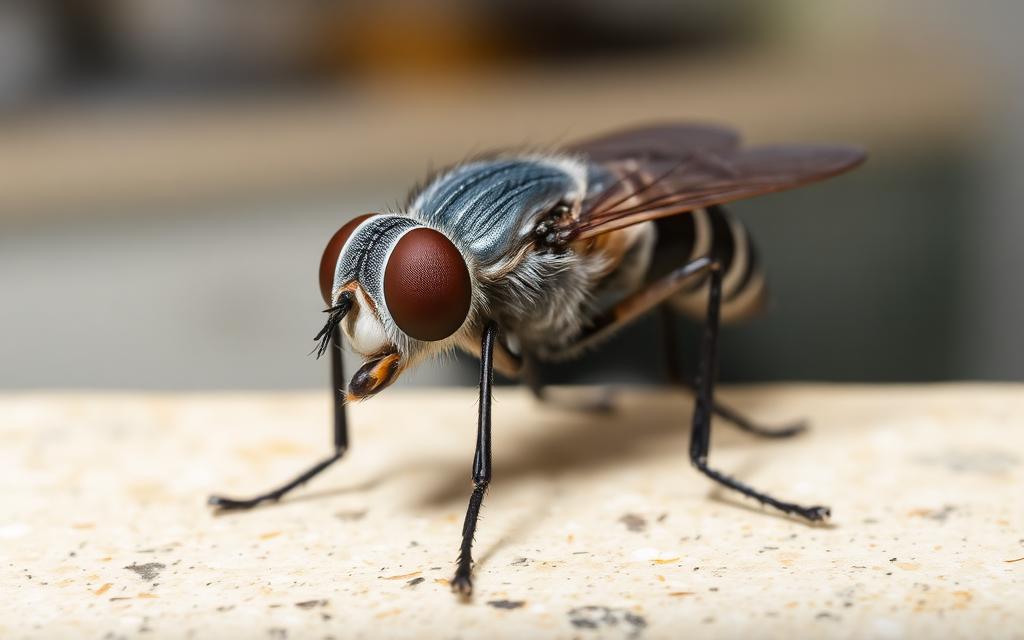
Drain flies (also called moth flies or sewer flies) are 1/8" long, fuzzy, and weak fliers that hover near sinks. House flies are 1/4", gray with four dark stripes on the thorax. Cluster flies look like large sluggish house flies and gather on south-facing windows in fall and spring. Phorid flies ("coffin flies") jump or run rather than fly.
Behavior & life cycle
Fly species behavior tells us where to look. Drain flies breed in the gelatinous biofilm that builds up in slow drains and overflow tubes. House flies breed in trash, compost, and pet waste. Cluster flies overwinter in attics and wall voids. Phorid flies often signal a dead rodent or sewer break inside a wall.
Health & property risks
House flies and phorid flies mechanically transmit pathogens including E. coli, salmonella, and shigella by walking across waste and then food contact surfaces. Drain and cluster flies are nuisance pests but not direct health risks.
Signs you may have a flies problem
- Small flies hovering around sinks, drains, or showers
- Large numbers of flies on south-facing windows in fall/spring (cluster flies)
- Sudden swarm of flies inside with no obvious source (often a dead rodent)
- Persistent flies in a kitchen or trash area
Our treatment approach
- 1Species ID and source inspection (drains, attic, voids, trash zones)
- 2Drain treatment with bio-foam to break down organic film
- 3Targeted residual application to resting surfaces
- 4Exclusion guidance for cluster flies in attics and soffits
Prevention tips
- Use a long brush and enzymatic drain cleaner monthly on slow drains
- Empty kitchen trash daily and rinse the bin weekly
- Keep compost bins tightly sealed and at least 30 feet from the house
- Seal attic vents and soffit gaps to prevent cluster fly overwintering
- Clean up pet waste in the yard daily
When to call Chaney
If any of these describe your situation, it's time to bring in a pro.
- Flies appear suddenly in winter (often a dead rodent in a wall)
- Small fuzzy flies hover around sinks, drains, or showers
- Large sluggish flies cluster on south-facing windows in fall/spring
- Persistent kitchen or trash-room flies after normal cleaning
Frequently asked questions
How do I get rid of drain flies?+
Pouring bleach down the drain rarely works — it doesn't dwell long enough to break the biofilm where larvae live. We use an enzymatic foam that clings to the pipe walls and digests the breeding source. Most drains are clear within 7–10 days.
Why do I see flies on my windows in fall?+
Those are almost always cluster flies — they overwinter inside attics and wall voids, then crawl toward warmth and light on sunny days. Long-term control is exclusion (sealing attic and soffit entry points) plus a residual treatment on resting surfaces.
Ready for a quote?
Tell us about the problem — we'll get back within one business day.