
Wasps & Hornets Control
Wasps, yellowjackets, and bald-faced hornets become aggressive fast in late summer. Knocking nests down with a store-bought spray is risky and often incomplete. We remove the nest and treat the void so they don't rebuild.
Quick answer
Should I spray a wasp nest myself?
It's not recommended. Most consumer sprays don't reach inside the nest, provoke the colony, and put anyone allergic at serious risk. Professional removal in protective gear, performed at dusk, is dramatically safer.
How to identify wasps & hornets
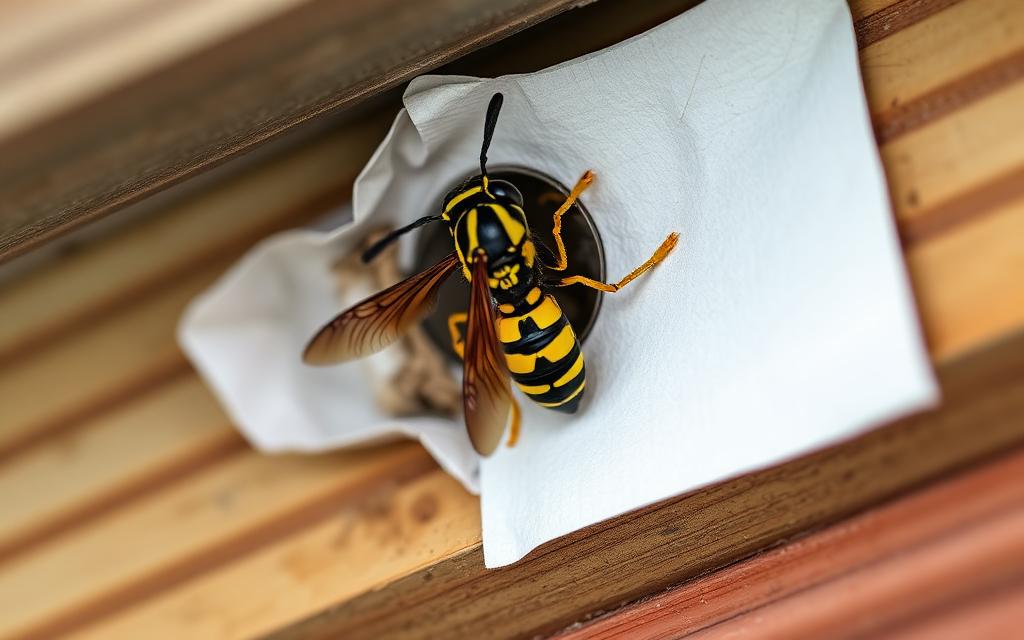
Paper wasps are slender with long dangling legs; their open umbrella-shaped nests hang under eaves. Yellowjackets are stockier with bright yellow-and-black stripes; they nest in the ground, in wall voids, and in attic vents. Bald-faced hornets are large and black-and-white; they build basketball-sized gray paper nests in trees and high under eaves.
Behavior & life cycle
Colonies grow through the summer and become most aggressive in August and September as workers compete for shrinking food resources. Yellowjacket and hornet colonies can contain several hundred to several thousand individuals at peak.
Health & property risks
Wasp stings cause sharp pain and swelling and, unlike honey bee stings, can be repeated by the same insect. Roughly 2 million Americans are allergic to insect stings, and severe allergic reactions (anaphylaxis) can be life-threatening. CDC reports about 60 fatalities per year in the U.S. from insect stings.
Signs you may have a wasps & hornets problem
- Visible paper nests under eaves, in soffits, or in shrubs
- Steady wasp traffic in and out of a wall void or attic vent
- Large numbers of wasps at exterior lights or trash bins
Our treatment approach
- 1Same-day service when scheduling allows
- 2Dusting and treatment of the nest void
- 3Physical removal once activity has stopped
- 4Preventive eave and soffit treatment on request
Prevention tips
- Inspect eaves, soffits, and outbuildings monthly in late spring — early nests are tiny and easy to remove
- Keep trash bin lids tight and rinse bins weekly
- Seal exterior gaps around vents, fascia, and utility penetrations
- Avoid wearing strong floral perfumes outdoors in late summer
When to call Chaney
If any of these describe your situation, it's time to bring in a pro.
- You see a paper nest under an eave, in a soffit, or in a shrub
- Wasps are flying in and out of a wall void, vent, or ground hole
- Anyone in the home is allergic to stings
- A nest is near a doorway, deck, kids' play area, or HVAC unit
Frequently asked questions
How fast can you remove a wasp nest?+
Most active nests can be treated the same day or next morning. Treatment is performed at dusk for safety when possible.
What's the difference between a wasp, hornet, and yellowjacket?+
All three are in the wasp family. Hornets and yellowjackets are sub-types of wasps with stockier bodies and more aggressive colony defense. Yellowjackets often nest in the ground or in wall voids; bald-faced hornets build large gray paper nests in trees.
Ready for a quote?
Tell us about the problem — we'll get back within one business day.