
Stored-Product Pests Control
Stored-product pests — Indian meal moths, grain weevils, sawtoothed grain beetles, and cigarette beetles — infest flour, grain, pet food, spices, and dry mixes in Colorado homes, restaurants, and warehouses. They're almost always brought in inside an already-infested package, then spread to nearby dry goods. We identify the species, find every infested source, and break the breeding cycle with targeted treatments and pheromone monitoring.
Quick answer
Why do I keep getting moths in my pantry even after I throw the food out?
Indian meal moth larvae crawl away from their food source to pupate — usually in upper cabinet corners, behind trim, or inside light fixtures. If you only toss the obvious infested package, the pupae you can't see still hatch new moths. Full cleanup means vacuuming corners and seams, plus a targeted crack-and-crevice treatment.
How to identify stored-product pests
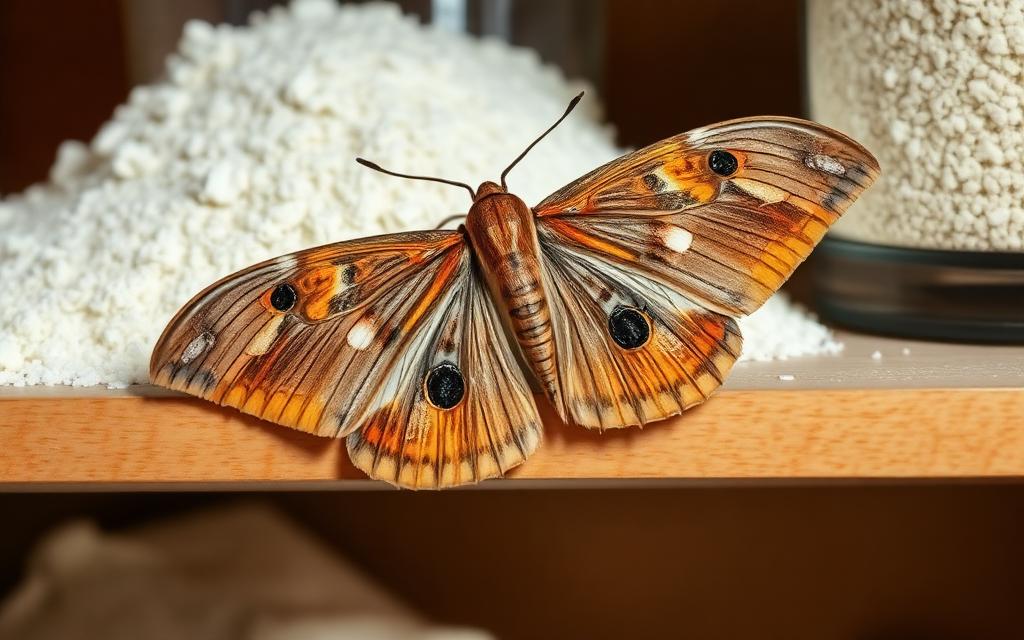
Indian meal moths are the most common: 1/2" long with the outer two-thirds of their wings copper-bronze and the inner third pale gray. You'll see them flying in slow zig-zags near pantries in the evening. Sawtoothed grain beetles are tiny (1/8"), flat, dark brown beetles with six saw-like teeth on each side of the thorax. Cigarette beetles are small reddish-brown ovals (1/16") with a humped back. Larvae of all three are small white-to-cream caterpillars or grubs found inside the food itself.
Behavior & life cycle
Stored-product pests are introduced inside store-bought packaging — flour, birdseed, dog food, spices, dried fruit, and grain-based decorations are common sources. Once inside, larvae chew through paper and thin plastic to spread to neighboring containers. Indian meal moth larvae often crawl out of the food and pupate in upper corners of cabinets, in ceiling/wall junctions, or inside light fixtures, which is why people see moths long after they think they cleaned out the source.
Health & property risks
Stored-product pests don't bite or sting and don't transmit disease. The risk is contamination of food and significant economic loss in commercial dry storage, plus allergic reactions in sensitive individuals exposed to large infestations.
Signs you may have a stored-product pests problem
- Small moths flying near pantries, especially in the evening
- Webbing or silken mats on the surface of grain, flour, or pet food
- Tiny holes chewed through cardboard or paper bags
- Small beetles or larvae in spice jars, dry mixes, or birdseed
- Pupae in cabinet corners or behind the trim of upper cabinets
Our treatment approach
- 1Inspect every dry-goods container in the affected room — bag and discard any with activity
- 2Vacuum cabinet corners, hinges, and shelves to remove eggs and pupae
- 3Targeted crack-and-crevice residual in pantry voids
- 4Pheromone monitoring traps to confirm the infestation is broken
- 5Follow-up inspection at 30 days (one full life cycle)
Prevention tips
- Store flour, grain, pet food, and birdseed in airtight glass or thick plastic containers
- Freeze new bags of flour or grain for 4 days before transferring to long-term storage — kills any introduced eggs
- Use older packages first; rotate dry goods every 3–6 months
- Wipe pantry shelves and check upper corners monthly
- Inspect bulk-bin and warehouse-club purchases before shelving
When to call Chaney
If any of these describe your situation, it's time to bring in a pro.
- Small moths fly from your pantry in the evening
- You find webbing or larvae in flour, grain, pet food, or birdseed
- Moths keep returning weeks after you threw the obvious package out
- You manage a restaurant, bakery, or warehouse with dry storage
Frequently asked questions
Where did stored-product pests come from in my house?+
Almost always inside a package you brought home — flour, birdseed, dog food, spices, dried fruit, decorative grain wreaths, or holiday decorations made with seeds. They were eggs or larvae when they came through the door.
Are pantry moths dangerous to eat?+
Eating contaminated food isn't usually harmful, but it's unappetizing and can cause an allergic reaction in sensitive people. Throw out anything with visible webbing, larvae, or moths.
Will sprays in my pantry get rid of them?+
Consumer sprays don't reach the pupation sites in cabinet corners and trim, and you can't broadcast them around food storage anyway. Professional crack-and-crevice treatment plus pheromone monitoring is the reliable approach.
Ready for a quote?
Tell us about the problem — we'll get back within one business day.