
Rodents Control
In Colorado winters mice and pack rats move indoors hunting warmth and food. Trapping alone is not a fix — we seal entry points so they stop coming back. Our process combines a full inspection, professional sealing, and targeted trapping for a long-term solution.
Quick answer
How do you treat for rodents?
We combine three things: a full inspection to find every entry point larger than a dime, professional sealing with steel mesh and sealant, and targeted trapping or baiting until activity stops. Removing rodents without sealing the home almost guarantees they return.
How to identify rodents
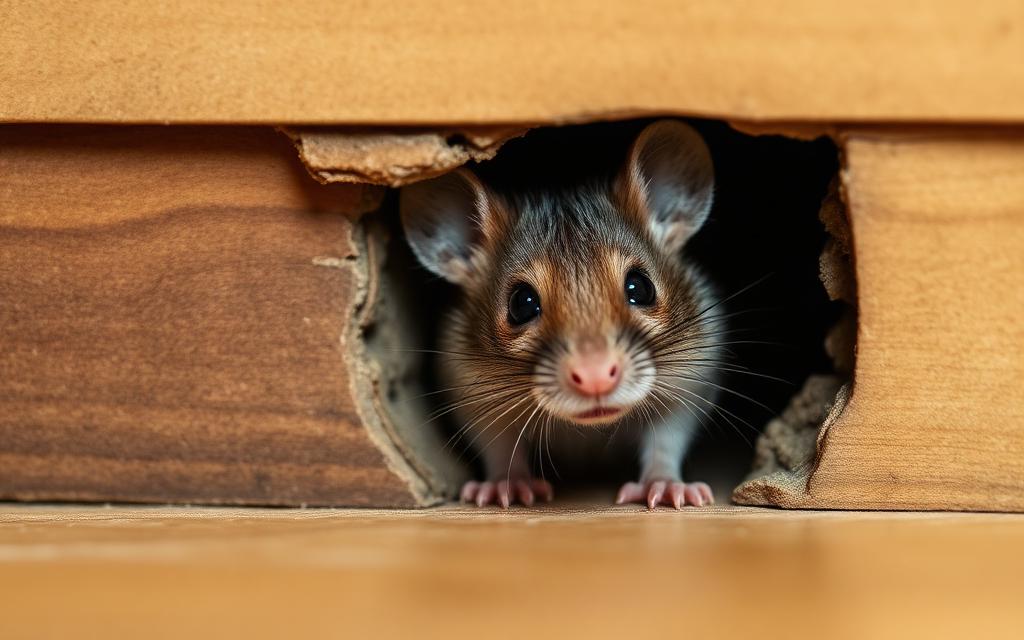
House mice are 2.5–4" long with large ears, a pointed snout, and a long thin tail. Norway rats are larger (7–10" body) with a blunt snout and a thick scaly tail. Pack rats (white-throated woodrats) are common in mountain properties and outbuildings — they cache shiny objects in nests.
Behavior & life cycle
Rodents need only a 1/4" gap (mice) or 1/2" gap (rats) to enter a home. They are most active at night, contaminate food, gnaw on wires (a fire hazard), and reproduce rapidly — a single pair of mice can produce 30–60 offspring per year.
Health & property risks
Rodents can transmit hantavirus (especially via deer mouse droppings in attics and outbuildings), salmonella, leptospirosis, and lymphocytic choriomeningitis. The CDC recommends never sweeping or vacuuming dry rodent droppings — wet them with bleach solution first and wear gloves and a mask.
Signs you may have a rodents problem
- Droppings under sinks, in pantries, or along baseboards
- Greasy rub marks along walls or pipes
- Scratching or scurrying sounds in walls or attic at night
- Chewed food packaging, wires, or insulation
- A musky ammonia-like odor in cabinets or basements
Our treatment approach
- 1Full interior and exterior inspection to find every entry point
- 2Exclusion: sealing gaps, vents, pipe penetrations, and weak spots with steel mesh and sealant
- 3Snap-trap and bait-station program tailored to the property
- 4Sanitation guidance and follow-up monitoring until activity stops
Prevention tips
- Seal all exterior gaps larger than 1/4 inch — focus on dryer vents, AC line penetrations, and garage door corners
- Keep pet food in sealed metal or thick plastic containers
- Trim shrubs and vegetation back from the foundation
- Store firewood at least 20 feet from the house and elevated off the ground
- Inspect attic and crawl space insulation annually for rub marks or droppings
When to call Chaney
If any of these describe your situation, it's time to bring in a pro.
- You hear scratching or scurrying in walls or attic at night
- You find droppings in pantries, drawers, or under sinks
- Pet food, wires, or insulation show fresh chew marks
- You smell a musky ammonia odor in cabinets or basements
Frequently asked questions
How do I prevent mice in Colorado winters?+
Seal exterior gaps larger than 1/4 inch, keep pet food in sealed containers, trim shrubs back from the foundation, and store firewood at least 20 feet from the house. Most invasions trace back to one or two unsealed openings near pipes or vents.
Are mouse droppings dangerous?+
Yes. Rodent droppings can carry hantavirus and salmonella. Don't sweep or vacuum them dry — wet them with a bleach solution, wear gloves and a mask, and bag them.
How long does it take to get rid of mice?+
Most homes are clear of activity within 7–14 days of our first visit. Long-term prevention depends on the exclusion work — that's the part that keeps them out for good.
Do ultrasonic repellers work?+
No — multiple university studies have shown ultrasonic devices have no measurable effect on rodent behavior beyond the first few hours. Exclusion and trapping are the only proven methods.
Ready for a quote?
Tell us about the problem — we'll get back within one business day.