
Termites Control
Despite Colorado's altitude and dry climate, Eastern Subterranean Termites are an active and growing problem in Colorado Springs and the surrounding foothills. Catching them early protects your home's structural value. Treatment varies by home and severity, so give us a call and we'll talk through what makes sense for your property.
Quick answer
Are termites a problem in Colorado?
Yes — termites are a real and growing problem in Colorado, especially in urban areas like Colorado Springs. The most common species, the Eastern Subterranean Termite, builds underground colonies and feeds on wood, causing significant structural damage to homes if left untreated.
How to identify termites
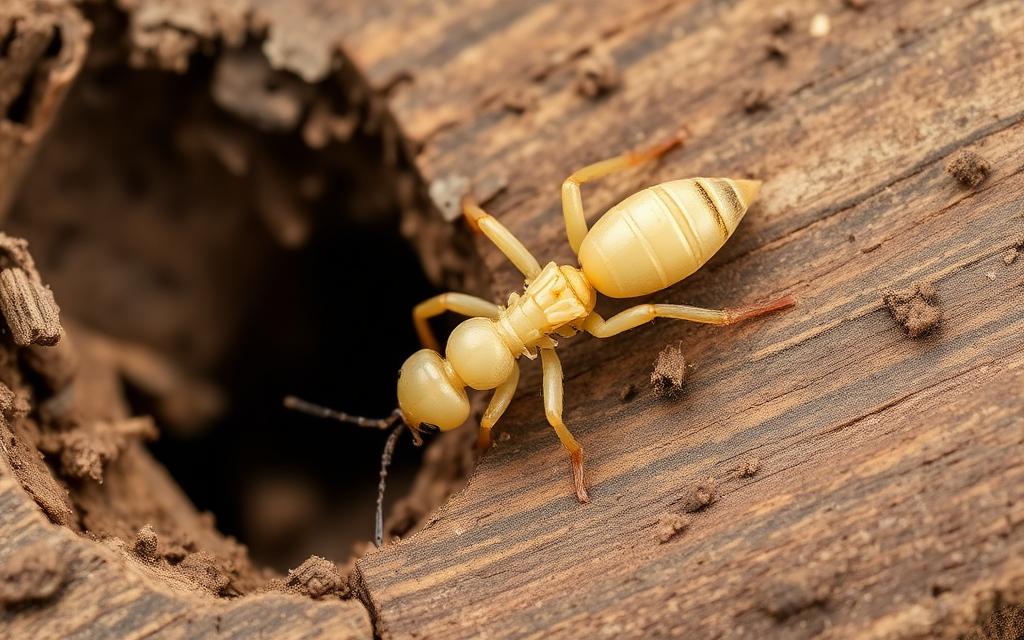
Eastern Subterranean Termite workers are pale cream-colored and about 1/8" long. Reproductive swarmers are dark brown to black with two pairs of equal-length wings. Termites are often confused with ants, but termites have straight antennae, a thick uniform waist, and equal-length wings — ants have bent antennae, a pinched waist, and unequal wings.
Behavior & life cycle
Subterranean termites build large underground colonies and forage upward into wood through pencil-thick mud tubes. A mature colony can contain hundreds of thousands of workers and consume several pounds of wood per year, focusing on structural framing, sill plates, and trim.
Health & property risks
Termites don't bite, sting, or transmit disease, but they cause an estimated $5 billion in U.S. property damage annually — more than fires, floods, and storms combined. Damage is rarely covered by homeowner insurance.
Signs you may have a termites problem
- Mud tubes on foundations, crawl spaces, or basement walls
- Discarded wings near windows or light fixtures in spring (a major swarm sign)
- Hollow-sounding or blistered wood
- Tight-fitting doors or warped trim that wasn't there last year
- Small piles of frass (sawdust-like droppings)
Prevention tips
- Keep mulch and woodchips at least 12" from siding
- Direct downspouts and grading away from the foundation
- Store firewood off the ground and 20+ feet from the house
- Repair leaks under sinks and around water heaters quickly
- Install or maintain TermaPest monitoring stations around the perimeter
Think you might have termites?
Termite work is highly specialized. Chaney offers professional WDI (wood-destroying insect) inspections so you know exactly what you're dealing with before any treatment decisions are made. Call us to schedule an inspection or learn more.
Frequently asked questions
How do I know if I have termites and not ants?+
Termite swarmers have straight antennae, equal-length wings, and a thick waist. Ants have bent antennae, unequal wings, and a pinched waist. If you find shed wings near a window in spring, call us — that's a classic termite sign.
How much damage can termites do in a year?+
An established colony can damage structural framing and trim within 6–18 months in Colorado conditions. Early treatment is dramatically cheaper than repair.
Is treatment safe around kids and pets?+
Yes. Modern termiticides are applied below the soil line or in tamper-resistant bait stations, with no exposure inside the living space.
How much does termite treatment cost?+
Cost depends on your home's size, foundation type, and the extent of activity. Our inspection and quote are free — and we'll show you exactly what we found before recommending treatment.
Ready for a quote?
Tell us about the problem — we'll get back within one business day.